
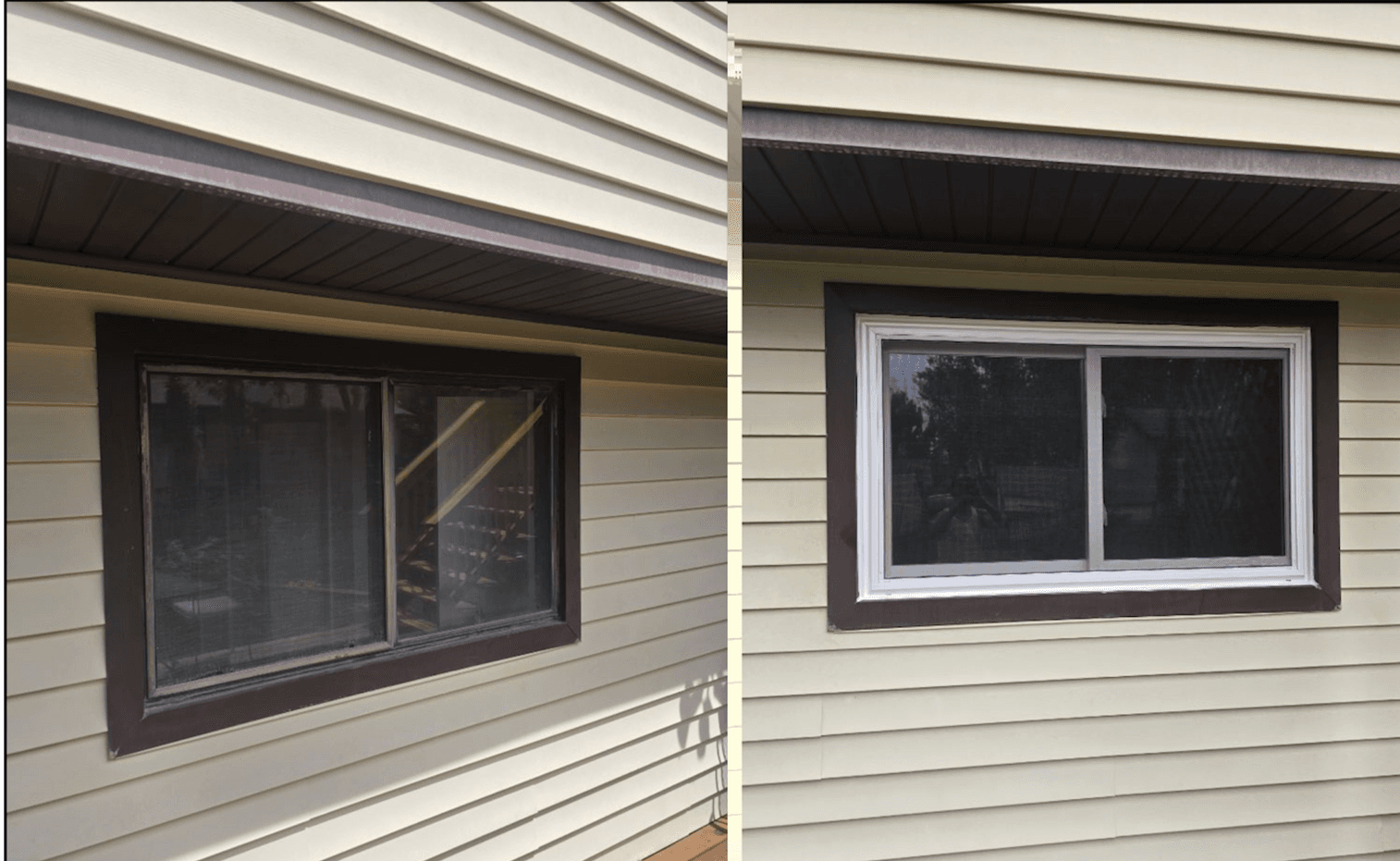
Why early fall is a smart time to check your windows
As the weather starts to cool, the small problems an older window has been hiding all summer tend to become a lot more noticeable. A room that never quite feels comfortable, a faint draft near the glass, condensation on a chilly morning, or a sash that has gotten harder to open all stand out more once you are trying to keep the cold out.
None of these signs is a reason to panic, and not every one of them means replacement. But early fall is a practical time to walk your home and take stock while the weather is still mild — so you can plan calmly rather than react to an urgent problem in the middle of winter. Below are seven of the signs our estimators look at most often, and what each one usually points to.
1. You Can Feel Drafts Around Your Windows
Stand next to a closed window on a breezy day and hold the back of your hand near the edges of the sash and frame. If you feel air moving, something that is supposed to seal the window has stopped doing its job.
A draft can come from worn weatherstripping, a gap in the caulking, a seal that has broken down, or a frame that has shifted over the years. The important thing to know is that a draft does not automatically mean the whole window has to be replaced. Many drafts trace back to a maintenance issue — new weatherstripping or fresh exterior caulk — that is worth evaluating first before assuming the worst.
2. Your Home Has Noticeable Hot and Cold Spots
If one room always feels cooler than the rest of the house, or a spot near a window never seems to hold its temperature, the windows in that area may be part of the reason. Older or poorly sealed windows let heat move through the glass and frame more easily, which can leave certain rooms feeling less comfortable than others.
Comfort is the honest way to think about this sign. Every home and heating system is different, so we will not promise a specific number — but many homeowners tell us that evening out those uncomfortable rooms is one of the first things they notice after replacing tired windows.
3. You See Condensation Between the Glass Panes
A little condensation on the inside or outside surface of your glass is usually normal. Interior condensation often just means the indoor air is humid and the glass is cold, and exterior dew on the outside can actually be a sign the glass is insulating well. Both can be wiped away.
What is not normal is fog or moisture trapped between the panes of a double- or triple-pane window, where you cannot wipe it off. That space is a sealed, insulated unit, and moisture inside it means the seal has failed and the insulating gas has escaped. A failed insulated glass unit has lost much of its efficiency and generally needs the glass replaced. So condensation is worth paying attention to — but only the between-the-panes kind points to a defective window.
4. Your Windows Are Difficult to Open, Close, or Lock
Windows should operate smoothly. When a sash sticks, will not stay up on its own, no longer lines up to close evenly, or the lock will not catch the way it used to, the hardware and moving parts are showing wear.
- Sashes that stick or bind when you open them
- A sash that drops or will not stay positioned correctly
- Difficulty closing the window so it sits evenly
- Locks or latches that no longer engage properly
- Worn balances, cranks, or other hardware
Some of these issues are repairable — a new balance, replacement hardware, or an adjustment can bring a window back to life. Others, especially when the frame itself has warped or swelled, are a sign the window is nearing the end of its useful life. A window that will not lock is also a security concern, and one that will not open can be a safety issue in an emergency, so these are worth addressing rather than living with.
5. Frames, Seals, or Components Are Showing Their Age
Take a walk around the outside of your home and look closely at the window frames and trim. Soft or spongy wood, paint that keeps peeling no matter how often it is redone, cracked or chalky vinyl, and gaps where the caulk has pulled away are all signs of age.
Cosmetic wear on its own does not automatically mean a window has to go — a repaint or fresh caulk can address a lot of surface-level aging. What matters is whether the deterioration is letting water or air into the frame and wall. When the components themselves are breaking down rather than just looking tired, replacement starts to make more sense.
6. Your Heating Bills Keep Creeping Up
If your heating costs have been climbing from one winter to the next without a change in rates or habits, air leaks and aging glass around your windows may be part of the reason. Drafty or poorly sealed windows make your furnace work harder to replace warm air that escapes outside.
Windows are only one piece of a home’s energy picture — insulation, ductwork, and the heating system itself all matter — so we will not promise a specific savings figure. But if rising bills show up alongside drafts and cold rooms, your windows are worth a closer look before the coldest months arrive.
7. Your Current Windows No Longer Fit Your Home’s Needs
Not every reason to replace a window is a defect. Sometimes the windows simply no longer suit how you live in your home.
- Wanting easier, smoother operation
- Needing different or better ventilation
- Updating the look and style of your windows
- Opening up a wall with larger glass and bigger views
- Improving overall functionality
- Replacing an older configuration during a remodel
This is often where homeowners start exploring different window styles — swapping a hard-to-reach unit for something easier to operate, opening up a room with a larger picture window, or updating the look of the whole facade during a broader project. If your windows are working against the way you want to use and enjoy your home, that is a legitimate reason to consider replacement.
Should You Repair or Replace Your Windows?
Here is the honest answer: not every window problem calls for a new window. Repair is often the right, cost-effective choice, and a good contractor will tell you when that is the case. Issues that can frequently be handled without full replacement include:
- A worn lock, latch, or handle
- Weatherstripping that has flattened over time
- A gap in the exterior caulk
- A single cracked pane or an individual component
- General maintenance and adjustment
Replacement tends to make more sense when the problems are persistent, widespread across many windows, or structural — failed insulated glass, rotted or warped frames, drafts that return after new weatherstripping, or a window that no longer operates safely. It is also the right call when you want broader improvements in comfort, operation, or appearance that a repair simply cannot deliver.
When we visit your home, we look at every window and give you a straight assessment of what genuinely needs replacing and what can wait or be repaired.
Why Consider Window Replacement Before Winter?
There are a few practical reasons to look at your windows before the coldest weather arrives. You can spot problems while they are still easy to inspect, improve day-to-day comfort ahead of the season when it matters most, and plan the project calmly instead of scrambling after something fails.
Getting the process started — the in-home measurement and the order — earlier in the season also gives your project a head start. Because replacement windows are custom-built to your openings, scheduling depends on the products you select, manufacturing lead times, and installation availability. Reaching out early does not guarantee installation before winter, and we will never promise a specific install date — but starting the conversation early gives you the most flexibility in planning.
Choosing Replacement Windows for Your Home
If you do decide to replace, WeatherMax is our window program. WeatherMax configurations are sourced from Anlin, including the Catalina and Coronado systems, and from Simonton. Frame construction, glass packages, and hardware differ between these systems, so your project specialist will confirm which features apply to the windows quoted for your home.
The right style depends on how each opening is used — how you want it to open, how much glass you want, and the look you are after. We build every window to fit your existing openings, and your project specialist will walk you through the options during a free in-home consultation. Explore the styles we offer:
Understanding Your Window Warranty
It is worth understanding what stands behind your windows before you buy. WeatherMax windows include a Lifetime Accidental Glass Breakage Warranty and a Double Lifetime Manufacturer Warranty, and American Remodeling provides a 1-Year Workmanship Warranty on installation. Coverage is subject to the applicable written terms, exclusions, and transfer requirements.
Hail, wind, and other acts of nature are not covered, and neither are caulking and routine maintenance. You can review the specifics on our window warranty page:
Frequently Asked Questions
Yes. Windows can be installed in colder months — our crews replace one opening at a time and work to keep your home protected during the process. Because our windows are custom-built, scheduling depends on product selection, manufacturing, and installation availability, so it is best to start early if you are hoping to have new windows in before deep winter.
A draft around a closed window usually points to worn weatherstripping, gaps in the exterior caulk, a broken seal, or a frame that has shifted over time. Some of these are simple maintenance fixes, so it is worth having them evaluated before assuming the whole window needs to be replaced.
Not always. Condensation on the inside or outside surface of the glass is often just a result of humidity and temperature and can be wiped away. Fog or moisture trapped between the panes, however, means the insulated glass seal has failed — that is the kind of condensation that typically calls for glass or window replacement.
Isolated issues like a worn lock, flattened weatherstripping, or a single cracked pane can often be repaired. Replacement makes more sense when problems are persistent or widespread — failed insulated glass, rotted or warped frames, drafts that return after resealing, or windows that no longer operate safely. A free in-home assessment is the surest way to know.
We install a full range of WeatherMax window styles, including single hung, double hung, casement, awning, picture, slider, bay, bow, and specialty custom-shape windows. Each is custom-built to your openings, with a variety of color and hardware options.
Think about how you want each window to operate, how much glass and ventilation you want, the look you are after, and the warranty behind the product. Features vary between the Anlin and Simonton systems in our WeatherMax program, and a project specialist can help you match the right window to each opening during a free consultation.
- #Windows
- #Replacement Windows
- #Homeowner Guide
- #Winter Prep